March 17, 2026
Investment Prospects in Global Logistics Infrastructure
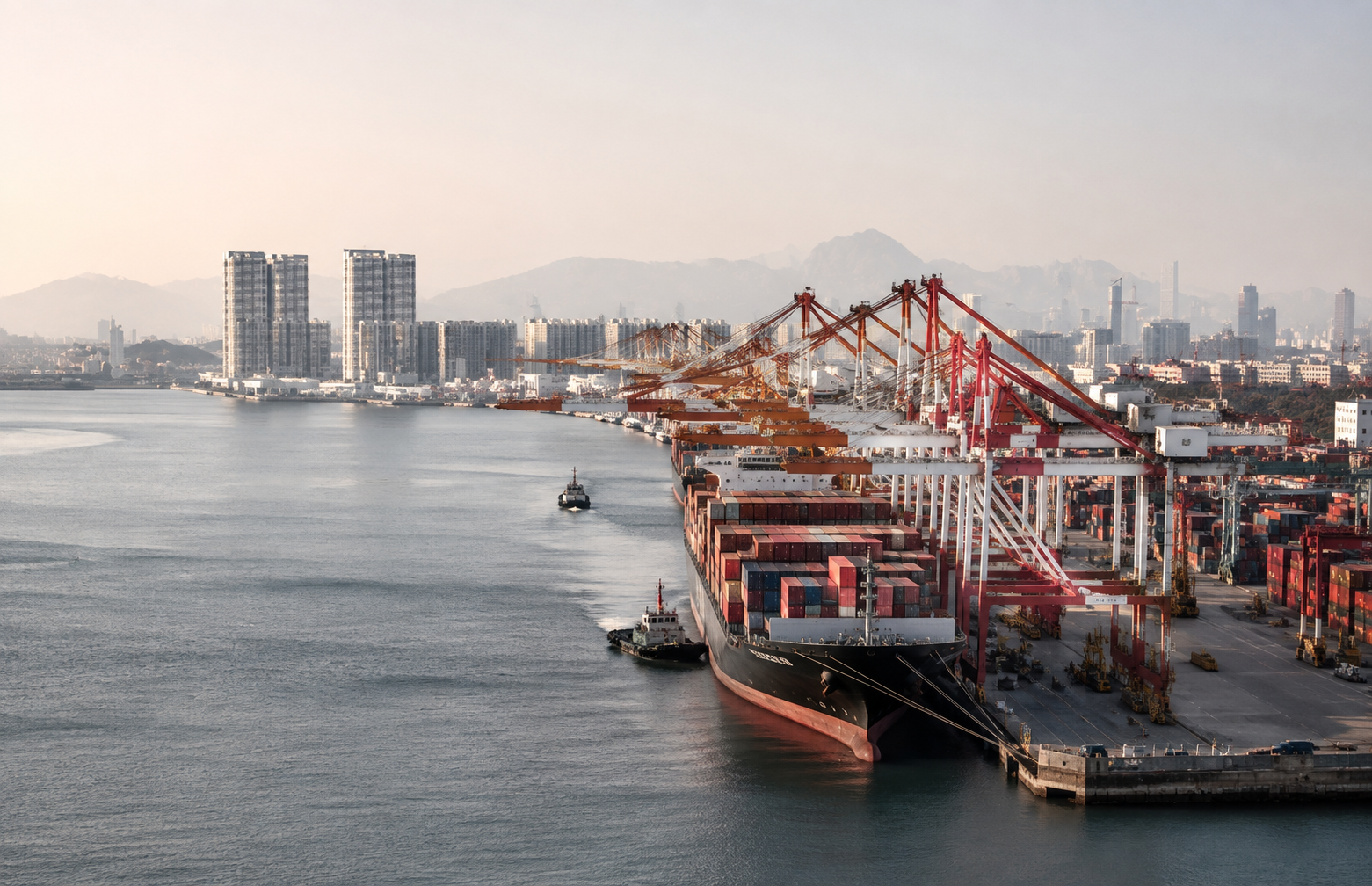
Global trade is entering a period in which the competitiveness of countries and cities will be determined not only by production capacity or market access, but also by their ability to control, redirect and technologically service global cargo flows. Maritime transport will retain its irreplaceable role as the backbone of the intercontinental economy, yet its architecture is set to change radically: dependence on narrow maritime corridors will increase the importance of new routes and hubs; containerised trade will gradually displace oil shipments; and ports will evolve from transhipment points into integrated platforms combining transport, energy, digital infrastructure and urban ecosystems. As a result, the centres of power in the future will not simply be the largest harbours, but hub cities capable of ensuring supply-chain resilience, attracting infrastructure capital and building entire technology ecosystems around logistics.
Maritime trade remains the principal means of transporting goods internationally today: more than 80% of global merchandise trade is carried by sea. Nearly half of this volume depends critically on a small number of strategic maritime chokepoints—straits and canals. In 2023, the Strait of Malacca accounted for approximately 23.7% of global cargo flows; the Strait of Hormuz for more than 11% of global seaborne trade; and the Suez Canal for roughly 12% of world trade, including up to 22% of container traffic. Disruption to any of these arteries can destabilise global supply chains immediately, as the grounding of the *Ever Given* in the Suez Canal in March 2021 clearly demonstrated.
According to UNCTAD, maritime transport accounts for around 77% of total freight activity across all modes when measured in tonne-kilometres. In 2025, seaborne freight reached 64.78 trillion tonne-kilometres, representing 77.3% of total transport activity. Energy commodities dominated, contributing 35.5 trillion tonne-kilometres, or 42.4% of all freight activity. Containerised cargo accounted for 23.5 trillion tonne-kilometres, or 28.1%, underscoring the strategic importance of containerisation to global commerce.
Over recent decades, containerisation has evolved from a niche segment into a foundational pillar of global transport. In 1980, container ships represented only about 2% of the global fleet’s total deadweight tonnage; by 2024, that share had risen to approximately 14%. Modern container terminals operate at exceptional speed: the average port stay for a container vessel is no more than one day—three to four times faster than the turnaround typically achieved by conventional dry-bulk vessels. At the world’s largest ports, a single container can be discharged in less than a minute.
Global container trade is also highly concentrated. In 2023, China handled approximately 310 million TEU—around three times the combined volume of the European Union and the United States. This illustrates East Asia’s undisputed leadership in the global logistics system.
A Changing Cargo Mix
Forecasts point to a fundamental shift in freight patterns by 2050. Oil accounted for more than 40% of global maritime trade in tonne-kilometres in 2016; by the middle of this century, its share could decline to 20%. Over the same period, containerised cargo could expand from roughly 16% to 40%, reflecting a broader transformation in the world economy.
This shift will reshape the global fleet. By 2050, container ships are expected to account for approximately 21% of total fleet deadweight tonnage, while oil tankers may represent only around 15%.
Seaborne LNG shipments are projected to grow from 400 million tonnes to 660 million tonnes, with total LNG carrier deadweight tonnage increasing by 45%. The dry-bulk sector is expected to retain a 43–44% share of total fleet deadweight. Overall, the global merchant fleet is forecast to expand from 38,400 vessels in 2023 to 40,700 vessels by 2050.
The Hubs and Ports of Tomorrow
Maintaining and upgrading logistics infrastructure will require unprecedented levels of investment. By 2040, global investment needs in transport and logistics are expected to reach approximately $36 trillion, with more than two-thirds of that total directed towards Asia.
Looking ahead, two broad categories of ports are likely to define the global logistics landscape.
The first includes gateway ports such as Shanghai or Los Angeles, which serve large domestic consumer markets. Beyond handling imports and exports, these ports distribute substantial volumes of goods within their respective national economies.
The second category comprises transhipment hubs such as Singapore, Dubai and Colombo. These locations may not have a major domestic market behind them, but they provide critical cargo-transfer and value-added logistics services for neighbouring countries and wider regions.
Globalisation and climate change are also creating opportunities for logistics hubs in territories that have not historically been regarded as central to world trade. As temperatures rise and Arctic ice recedes, the Northern Sea Route could eventually become accessible year-round with limited need for icebreaker support, rather than operating for only a few months each year. Such a development could materially alter its role in international trade.
Some cities are already strengthening their position as international hubs. Vladivostok, for instance, has emerged as a strategic link between Russia and global markets. Southeast Asian countries—including Indonesia and the Philippines—may likewise become important future growth points as transport and logistics centres. Across Africa, demand for new port capacity is also growing.
The logistics hubs of the future will be far more technologically advanced than those of today. They will rely on digital platforms to monitor, optimise and manage cargo flows, alongside automation systems designed to improve operational performance. Intelligent management tools based on artificial intelligence and big-data analytics will become integral to port operations. Autonomous vessels, trains and trucks will increasingly form part of the end-to-end logistics chain.
The transition to green logistics and decarbonisation will be equally important. Future transport and logistics hubs will use alternative fuels—including biofuels, methanol and hydrogen—as well as carbon-capture systems, reducing their environmental footprint while enhancing the resilience of the wider system.
As quantum computing and other advanced technologies mature, cargo handling and freight movement may be optimised even further. Integrating these capabilities into hub infrastructure has the potential to raise efficiency materially and lower operating costs.
Cross-sector models of financing and governance are already emerging. Investment strategies are moving away from isolated assets towards integrated solutions in which transport, energy and digital infrastructure are developed as a single project. In 2023–2024, approximately 75% of global infrastructure capital raised was directed towards such cross-sector strategies. The concept of the hub as a multi-sector platform will only become more important.
The Hub Megacity as an Ecosystem
The integration of megacities and port hubs is a natural development, particularly given that roughly 40% of the world’s population lives within 100 kilometres of a coastline. This creates favourable conditions for the convergence of urban infrastructure and logistics networks.
Large metropolitan areas are already centres of population and resource concentration, naturally attracting trade flows. Integrating the city and the port into a single ecosystem enables hub megacities to operate as one interconnected organism, moving goods seamlessly from global routes to consumers and businesses.
In this ecosystem, hubs will become high-tech, fully autonomous “dark factories” of logistics. They will be located alongside energy sources—including renewables and nuclear power—as well as data centres.
Closed-loop routes for autonomous freight trucks, trains and drones will connect the hub with the broader metropolitan area, ensuring continuous cargo flows.
The hub and the city will therefore merge into an integrated ecosystem in which logistics efficiency, energy generation, digital technology and quality of urban life reinforce one another.
The Capital Opportunity
For investors, the emerging map of maritime logistics is not a narrow infrastructure theme; it is one of the largest long-term opportunities for capital reallocation. Value will be created not only through traditional port assets, but at the intersection of terminals, warehousing and urban real estate, energy systems, data centres, digital cargo-management platforms, autonomous transport and low-carbon fuel solutions.
The most compelling projects will be those that can secure a strategic position along emerging trade routes, integrate with fast-growing metropolitan areas and simultaneously deliver speed, resilience and decarbonisation across supply chains. The winners will be investors who begin today to view a port not as a stand-alone asset, but as the core of a multi-sector ecosystem—assessing the geopolitics of trade routes, access to energy, digital maturity, regulatory risk and the potential to create value around the hub.
The window of opportunity is open now. Capital that enters the infrastructure of tomorrow’s logistics system early will gain more than returns from individual assets—it will secure a stake in the new architecture of global trade.